We may earn a commission when you buy through links on this page.
Buyer's guide
Nib sizes, and what left-handers need
Nib sizes run from extra fine to broad, but they aren't standard across brands. Japanese makers such as Pilot and Platinum grind their nibs narrower, so a Japanese fine writes close to a European extra fine, while Lamy, TWSBI and Kaweco run wider. If you write small, fill planners or use cheap paper, start with a Japanese fine. Broad nibs show off ink colors but need good paper and big handwriting.
Left-handers can use fountain pens, and the nib matters less than how you hold your hand. Goulet Pens notes that underwriters, who keep the hand below the line, rarely smudge, while side-writers and overwriters drag their hand through wet ink. Those writers do best with a fine or extra-fine nib that puts down less ink, plus a quick-drying ink. Skip stub and flexible nibs, which lay down more ink. A retractable pen with a fine nib, or a cheap Japanese fine, is a low-risk place to start.
Cartridges, converters and bottled ink
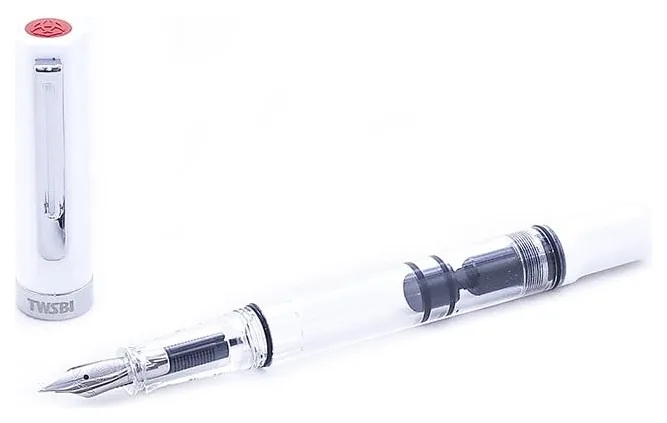
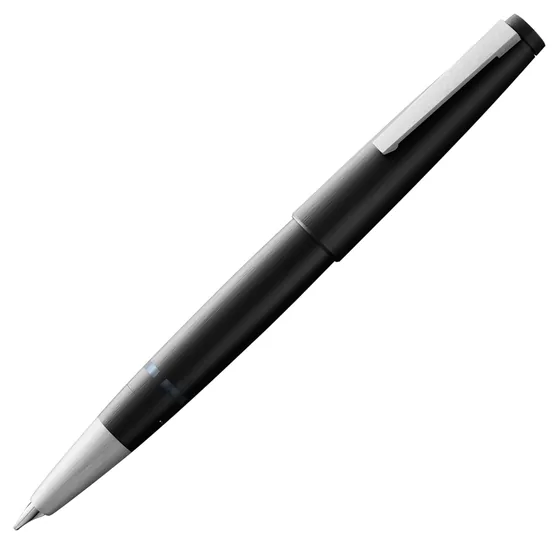
Fountain pens fill in one of three ways. Cartridges are sealed plastic tubes that click into the pen: clean and simple, but each brand uses its own shape, and the color choice is small. A converter is a little refillable pump that fits where the cartridge goes, so you can draw ink from any bottle. A piston filler, like the TWSBI Eco or Lamy 2000, has that pump built into the barrel and holds more ink, but it can't take cartridges at all.
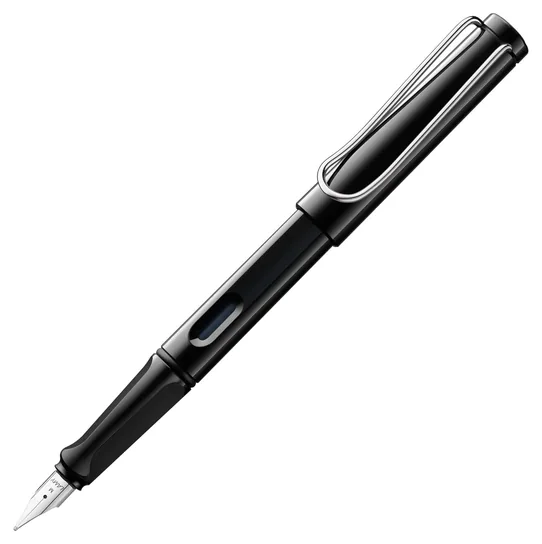
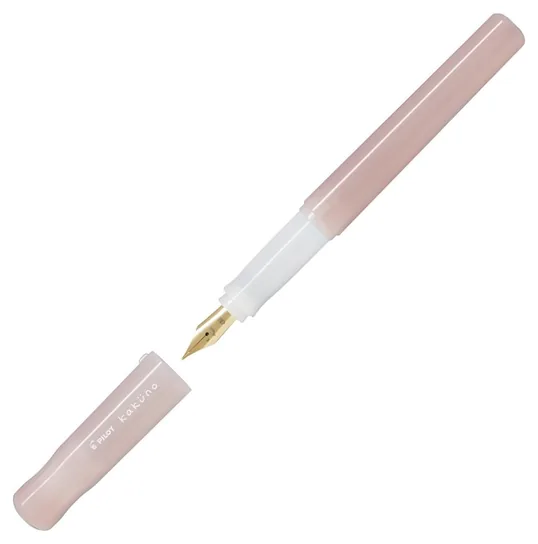
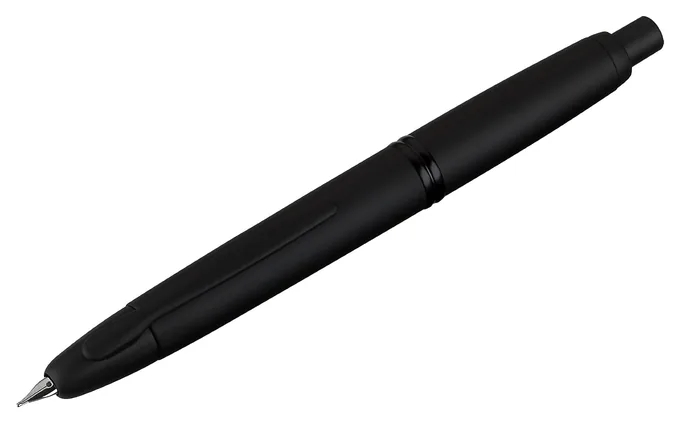
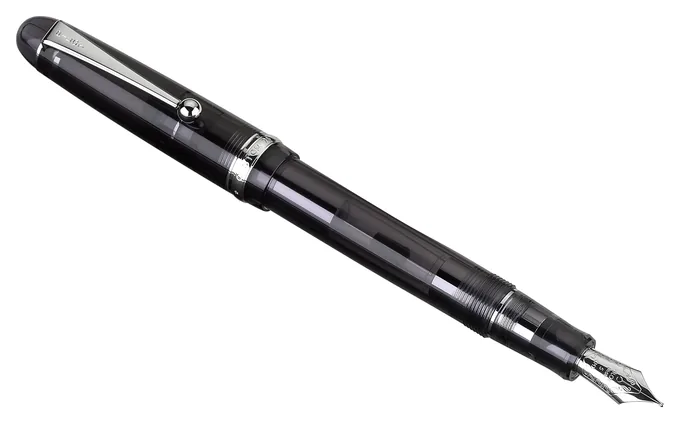
Check the box contents before you buy. On the listings we checked, the Pilot Vanishing Point and Custom 74 include a converter, while the Lamy Safari and Pilot Kakuno include a cartridge and sell the converter separately. Bottled ink costs far less per page than cartridges and comes in hundreds of colors, which is why many people add a converter within a few weeks. Stick to inks made for fountain pens; India ink and drawing inks can clog the feed for good. Pilot's small and large converters fit the Kakuno, and Lamy's own converter fits the Safari.
Paper, care and other pens for writing
Fountain pen ink soaks into paper, so cheap copy paper and thin notebooks can feather, with fuzzy lines, or bleed through to the next page. Smooth, heavier paper made for fountain pens keeps lines crisp, and a fine nib is more forgiving on whatever paper is at hand.
Care is simple. Cap the pen when you stop writing, store it nib up if it will sit for a while, and flush it with plain water when you change ink colors or every few weeks. If a pen skips after a break, a few seconds of the nib touching a damp paper towel usually gets the ink flowing again.
A fountain pen isn't the only good choice among pens for writing. For quick notes on any paper, see our best gel pens; for sketching and math, our best mechanical pencils. Shopping for someone who loves to write? Our gifts for writers has more ideas.
Frequently asked questions
Are fountain pens good for beginners?
Yes. A starter fountain pen costs about the same as a nice gel pen set, writes with almost no pressure and lasts for years with simple care. Begin with a fine nib and the cartridge that comes in the box, then add a converter and bottled ink once you know you like it.
What nib size should I get for my first fountain pen?
Most people do well with a fine nib. Japanese fine nibs, from Pilot and Platinum, write thinner lines than European fines from Lamy or Kaweco, so a Japanese fine suits small handwriting, planners and cheap paper. A medium shows off ink color more but takes longer to dry and can bleed on thin paper.
Can left-handed people use fountain pens?
Yes. Lefties who write with the hand below the line rarely have trouble. Those who write over or beside their words should choose a fine or extra-fine nib, which puts down less ink, and a quick-drying ink. A retractable such as the Pilot Vanishing Point, or a Lamy with its left-handed nib, is worth a look.
Do fountain pens come with ink?
Most come with at least one ink cartridge so you can write right away. Some, such as the Pilot Vanishing Point and Custom 74, also include a converter for bottled ink, while others sell it separately. Piston fillers like the TWSBI Eco and Lamy 2000 use bottled ink only, so you'll need to buy a bottle.
Can you use a fountain pen on regular printer paper?
You can, but cheap printer paper often makes ink spread into fuzzy lines or show through on the back. Fine nibs and quick-drying inks help a lot. For notes and journals, a notebook sold as fountain-pen friendly, usually with smoother, heavier paper, keeps lines sharp and lets both sides of each page be used.
How often should you clean a fountain pen?
Flush it with plain water whenever you change ink colors, and every few weeks if you use the same ink. Pull out the cartridge or empty the converter, then rinse the nib end until the water runs clear and let it dry. A pen left unused for months should be emptied first.
Prices were checked on Amazon on October 23, 2026 and change often.
As an Amazon Associate, Speedwrite earns from qualifying purchases. We choose every pick ourselves; brands don't pay to be listed.